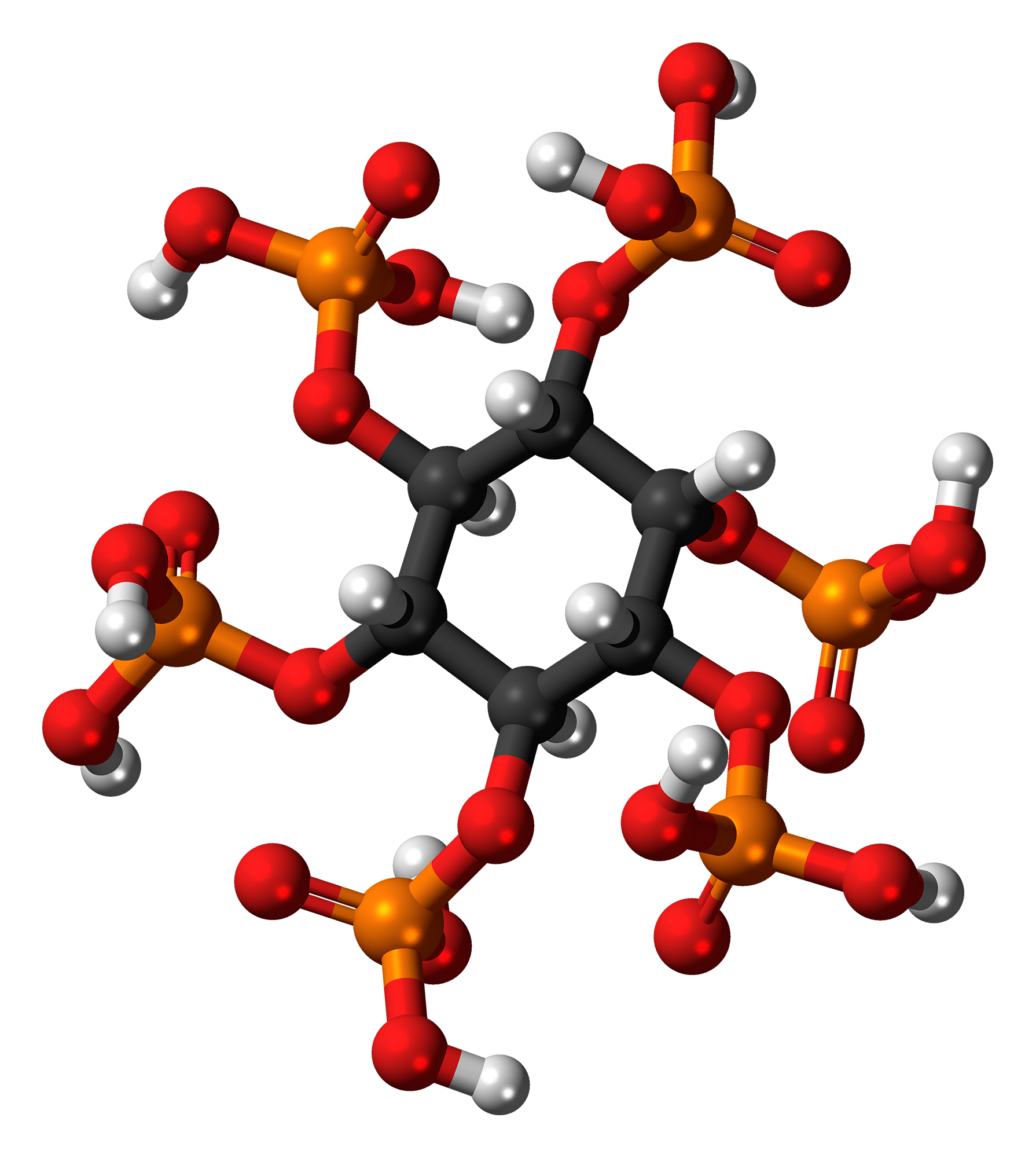
Studies from the research collection. Publication dates refer to the original papers.
Review2026
Chatree S, Saverino A, Chatsiriwech J, et al. Medical Research Archives. 2026;14(7).
Study design Review of preclinical and clinical studies.
The authors review the evidence on IP6 and inositol in breast cancer: effects on proliferation, differentiation, and apoptosis of breast cancer cells, the signaling pathways involved, and clinical reports of IP6 with inositol given alongside chemotherapy. They conclude that larger clinical trials are needed.
Human study2010PMID: 20152024
Bacic I, et al. Journal of Experimental & Clinical Cancer Research. 2010;29:12.
Study design Randomized, placebo-controlled pilot study; 14 participants.
The investigators reported differences in quality of life, functional status, and blood-count outcomes during chemotherapy. The small sample limits the conclusions.
Cell study2010PMID: 20127021
Schroterova L, et al. Oncology Reports. 2010;23(3):787-793.
Study design Human colorectal carcinoma cell lines: HT-29, SW-480, and SW-620.
IP6 and inositol were studied individually and in combination. Effects varied with concentration and cell line; inositol enhanced apoptosis-related activity with IP6 in the tested models.
Animal study1989PMID: 2752519
Shamsuddin AM, Ullah A, Chakravarthy AK. Carcinogenesis. 1989;10(8):1461-1463.
Study design Experimental study in CD-1 mice.
An early University of Maryland investigation of inositol and IP6 in cell proliferation and tumor formation. Animal experiments provide biological evidence; they do not establish efficacy in people.